




Table of Contents
Get Custom eCommerce Fulfillment Service
Book a Meeting
Sustainable Ecommerce Packaging From China: Materials, Tradeoffs, and Costs
Time: Sep 21,2026 Author: SFC Source: www.sendfromchina.com
Sustainable packaging sounds simple until a real order lands on the packing bench. The paper mailer tears. The compostable bag needs an industrial facility your customer cannot find. Or a small product goes into a recycled box big enough for a toaster, so you end up shipping air.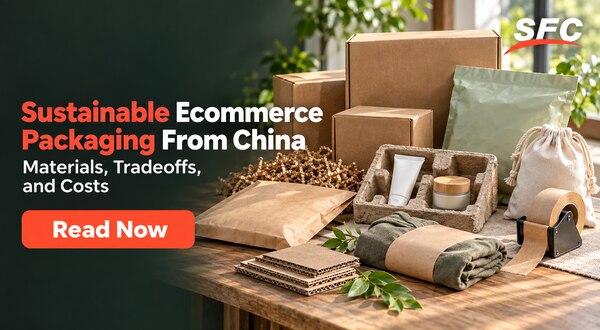
For brands sourcing and fulfilling from China, the best package is rarely the one with the greenest-looking label. It is the lightest practical system that protects the product, fits the route, supports honest claims, and works at the packing station without causing chaos. Let’s build that system from the job outward.
Start With the Packaging Job, Not the Material Trend
Packaging has four jobs: contain the item, protect it, move efficiently, and tell the customer what to do after opening. Miss one and the environmental win may disappear.
Start with a short packaging brief for each product family:
- What can scratch, leak, crush, bend, or absorb moisture?
- Does the order travel by air, sea, postal network, or several parcel carriers?
- Will it sit in a humid warehouse or on a wet doorstep?
- Which layers are truly necessary?
- How will the customer reuse, recycle, or dispose of each part?
The priority order is practical. Remove unnecessary layers, right-size the pack, and reduce damage. Then add verified recycled or responsibly sourced content and improve recovery at the destination. Consider reuse only when there is a realistic return route and enough repeat cycles.
That order matters. A heavier “eco” box that creates more dimensional weight and still needs a plastic overwrap may not beat a compact recycled poly mailer. Sustainability is a system result, not a texture.
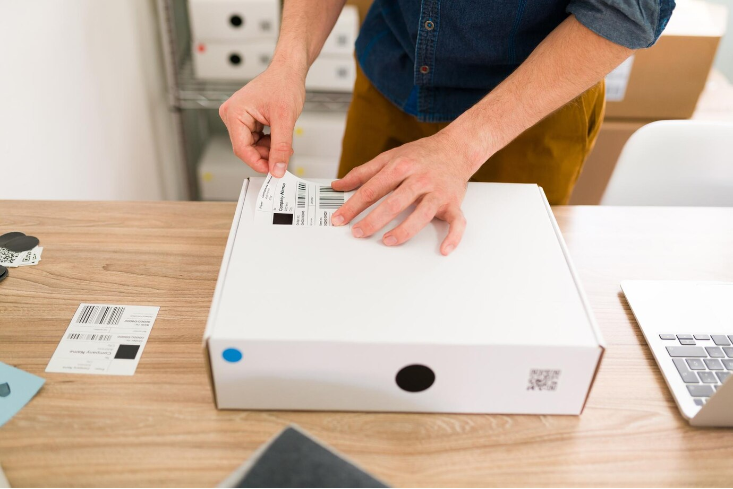
Recycled, Recyclable, Compostable, and Reusable Are Not Synonyms
Packaging language gets muddy fast. A material can be recyclable but contain no recycled content. A compostable film may pass a controlled test yet remain intact in a backyard pile. Even “paper” does not mean a local program will accept a laminated mailer.
| Term | What it actually tells you | What still needs checking |
| Recycled content | Some input came from recovered material rather than entirely virgin feedstock. | The percentage, post-consumer versus pre-consumer content, and evidence for the claim. |
| Recyclable | The package can technically be reprocessed under stated conditions. | Collection access, sorting rules, coatings, labels, adhesives, color, and local market demand. |
| Renewable | The feedstock can regenerate, such as wood fiber or certain plant crops. | Forestry or farming impacts, processing inputs, certification, and end-of-life route. |
| Biodegradable | Microorganisms can break down the material under certain conditions. | The environment, time frame, test method, and whether the claim is meaningful to buyers. |
| Compostable | The material meets defined breakdown and ecotoxicity criteria in specified composting conditions. | Industrial versus home composting, certification scope, collection access, inks, labels, and zippers. |
| Reusable | The pack is designed for more than one trip or use. | Return rate, cleaning, loss, extra weight, reverse logistics, and actual number of cycles. |
Treat these words as directions, not gold stars. “Compostable” is an instruction with conditions, not a disappearing trick. Explain those conditions plainly.
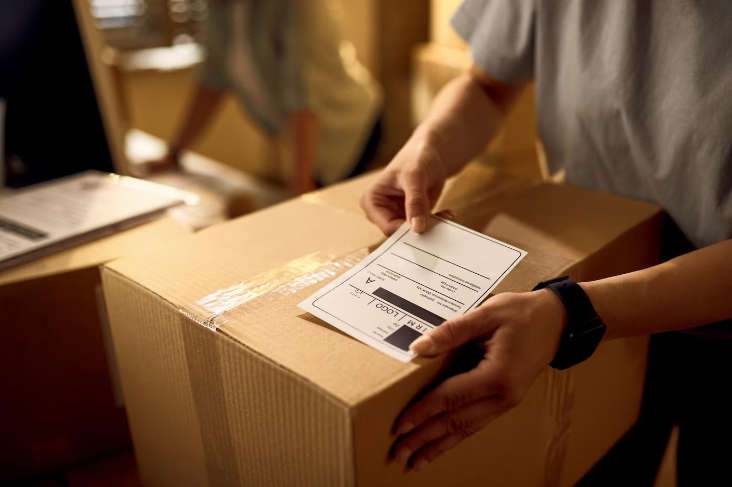
Comparing Sustainable Packaging Materials Available From China
China has a deep packaging supply base, from kraft cartons to molded fiber and custom films. Narrow the field by product risk, shipping route, order profile, and destination disposal systems.
Fiber-Based Options
Recycled corrugated boxes are the dependable workhorse for mixed orders, fragile goods, heavier items, and stacking. Watch for oversizing, weak board in humidity, and excessive lamination.
Kraft paper mailers work for books, apparel, accessories, and flat items. Customers understand them, but rain, sharp corners, and overfilling expose their limits.
Molded pulp inserts can replace plastic foam around electronics, cosmetics, glassware, and home goods. They hold products neatly, though tooling, nesting, dust, and moisture resistance need attention.
Honeycomb paper adds cushioning or compression strength for furniture parts, appliances, ceramics, and other large products. It can be bulky, so include warehouse handling in the calculation.
Flexible and Hybrid Options
Recycled polyethylene mailers use little material and resist rain. They suit non-fragile goods when parcel weight and cube matter. The weak point is recovery: film collection is inconvenient in many markets.
Compostable mailers may suit brands with verified destination access. They are not a universal plastic replacement. Test seals, shelf life, heat, humidity, certification, and disposal wording.
Reusable packs suit rental, repair, resale, or repeat subscription programs. In one-way cross-border ecommerce, returns may cost and emit more than expected. No return loop, no reuse benefit. A bit blunt, but true.
| Material or format | Good fit | Useful strength | Main tradeoff | Typical cost direction |
| Recycled corrugated box | Fragile, heavy, mixed-SKU, or stackable orders | Protection, printability, broad recovery familiarity | Weight, moisture, and dimensional volume | Low to medium for stock sizes; higher for custom print or structure |
| Kraft paper mailer | Apparel, books, accessories, flat goods | Lightweight, simple presentation, easy opening | Tear and water resistance | Low to medium |
| Molded pulp insert | Cosmetics, electronics, bottles, homeware | Product fit, cushioning, plastic-foam replacement | Tooling, dust, bulk, moisture | Medium to high at low volume; improves with scale |
| Honeycomb paper | Large, heavy, or crush-sensitive products | Compression and cushioning | Storage volume and added packing steps | Medium |
| Recycled poly mailer | Soft, non-fragile goods | Low weight, low cube, rain resistance | Film-recycling access and puncture risk | Usually low |
| Compostable mailer | Selected lightweight goods with a credible composting route | Reduced reliance on conventional fossil plastic in some designs | Shelf life, facility access, confusing disposal | Medium to high |
| Reusable return pack | Rental, resale, repairs, closed-loop subscriptions | Multiple potential cycles | Return logistics, cleaning, loss, higher unit cost | High upfront; cycle economics vary |
A fulfillment partner should check which ecommerce packing materials available at a China warehouse can be stocked consistently. A brilliant insert is useless if replenishment leaves orders waiting.
The Tradeoffs That Marketing Copy Usually Skips
Paper Versus Plastic Is the Wrong First Question
Paper feels familiar and is often easier to recover. Plastic can be lighter, thinner, and better in rain. Either one can be wasteful when badly sized or combined with incompatible layers.
Ask which design protects the product with the least material and a realistic recovery route. A compact recycled poly mailer may beat a rigid box for a T-shirt. A strong paper mailer may prevent punctures and returns for a sharp-cornered book.
Product Protection Is Part of Sustainability
A damaged product brings another pack, shipment, and often another product. That can outweigh a few grams saved from an insert. Test the whole packed product, not an empty box or material swatch.
Common trials include drop, vibration, compression, puncture, seal, rub, and humidity exposure. The exact test plan should reflect product fragility and the distribution route. A ceramic mug and a cotton cap do not need the same ordeal.
Mixed Materials Create Awkward End-of-Life Choices
A paper mailer with a plastic bubble lining, metalized film, heavy wet-strength coating, or permanent plastic window may frustrate recycling. Decorative magnets, ribbons, foam pads, and oversized labels do the same. If components cannot be separated by hand, treat the pack as a combined structure and confirm how it will be handled locally.
Simple mono-material designs often win here. They are not always glamorous. They are just easier to explain and, quite often, easier to process.
What Sustainable Packaging Really Costs in China
The unit quote is only the front door. Total cost includes design, samples, tooling, MOQ, China freight, receiving, storage, labor, outbound transport, damage, and leftover stock.
Custom packaging can be economical at volume. At lower volume, a stock mailer plus a paper band, stamp, or insert may cost less and create less obsolete inventory—handy while logos, claims, or product sizes still change.
| Cost layer | What to include | Why brands miss it |
| Development | Structure design, artwork checks, prototypes, print proofs, lab or transit tests | These charges arrive before the unit price looks “real.” |
| Tooling | Cutting dies, printing plates, molds for pulp inserts | Tool ownership, maintenance, and replacement may be unclear. |
| Material and conversion | Board or film grade, recycled-content premium, inks, coatings, adhesives | Quotes may use different specifications even when samples look similar. |
| MOQ and inventory | Production minimum, cartons per pallet, safety stock, slow-moving sizes | Cash and warehouse space get tied up in packaging, not saleable product. |
| Inbound China logistics | Supplier delivery to the fulfillment warehouse, receiving, counting, inspection | A distant factory or small split delivery changes the landed cost. |
| Fulfillment labor | Folding, taping, wrapping, insert placement, label removal, pack time | A clever pack may be fiddly at 500 orders a day. |
| Outbound shipping | Actual weight, dimensional weight, oversize fees, destination charges | A few extra centimeters can cost more than the package itself. |
| Failure and change | Damage, reshipment, customer complaints, obsolete printed stock | These costs sit outside the packaging purchase order. |
For an apparel order, a recycled poly mailer may have the lowest price and weight. A paper mailer may need more room to avoid seam failure. A certified compostable mailer may cost more and need careful storage. The winner depends on order mix, rain exposure, recovery access, and pack speed.
Carriers may charge dimensional weight when parcel volume exceeds actual weight. A centimeter saved on three dimensions matters across thousands of orders. Measure the packed parcel, not the flat package.
Customization also changes the equation. This guide to branded packaging fulfillment in China explains how branded materials meet warehouse execution. Keep artwork version control and stock ownership clear before placing a large MOQ.
Verify the Claim Before You Print It
A certificate is not a magic passport. It must match the legal entity, facility, material, scope, and validity period for your order. Ask for the number, issuer, scope, expiry, and relevant transaction or batch records.
For fiber, FSC Chain of Custody certification can support supply-chain traceability. It does not automatically mean a pack is recycled or locally recyclable. For recycled plastics or textiles, RCS or GRS may support applicable content and custody claims, depending on scope.
For compostable plastics, EN 13432 or ASTM D6400 address specified industrial conditions. They do not prove home compostability or local collection. ISO 14021 guides self-declared environmental claims, while local law controls what you may say.
In the United States, the FTC Green Guides environmental claims summary warns against broad, unqualified claims such as “green” or “eco-friendly.” Claims about recycled content, recyclability, degradability, and compostability need specific support and, where relevant, clear qualifications.
In the EU, the European Commission’s packaging waste guidance covers the PPWR. It entered into force in 2025 and generally applies from August 12, 2026. It addresses prevention, recyclability, recycled content, labeling, and reuse. National EPR registration, reporting, and fees still need market-by-market checks.
Before approving a claim, keep a small evidence file:
- Final packaging specification and bill of materials
- Supplier and converter legal names
- Valid certificates with relevant scope
- Purchase and batch records
- Test reports for the finished pack, not just raw material
- Approved artwork and disposal wording by destination
- Written change-control rules for material substitutions
Specific wording is safer and more useful. “Outer box contains 80% recycled fiber by weight” tells a customer something. “Planet-friendly packaging” mostly creates questions.
Turn the Idea Into a Repeatable China 3PL Process
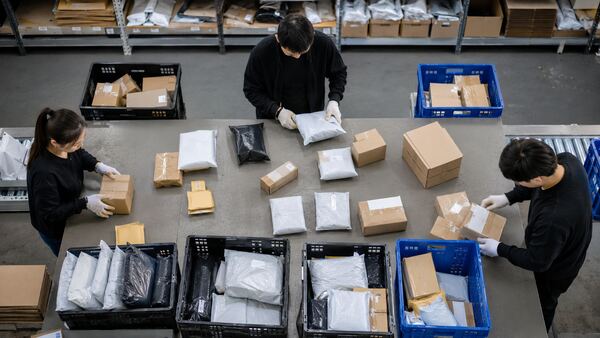
The warehouse needs a pack recipe, not a mood board. Create a packaging BOM by SKU or order profile. Record the box or mailer, insert, void fill, tape, label position, seal, weight limit, and exception rule.
Build a Shortlist and Check Documents
Compare suppliers against one specification. Request production-grade samples. Check dimensions, weight, odor, print rub, seams, adhesive, content evidence, and lot coding. Confirm whether subcontractors make any component.
Test the Packed Product
Run a pilot through normal storage and outbound handling. Pack as operators will at volume and record failure modes. If a mailer tears at its nominal limit, lower the fill rule or change size.
Set Up Receiving and Inventory Controls
Give packaging its own SKU, unit, reorder point, lead time, and approved revision. At receipt, sample dimensions, print, damage, moisture, and material changes. Rotate films or adhesives by shelf life where required.
Train the Packing Station
Show operators photos and one physical golden sample. Time the process; 40 extra seconds hurts at peak. Use eco-friendly packaging and other value-added services when kitting, inserts, relabeling, or presentation need controlled execution.
Measure and Improve
Track cost per order, pack time, dimensional weight, damage, reshipments, complaints, and waste together. A cheaper box that raises damage may be the expensive choice.
Connect the packaging BOM to the wider China-based order fulfillment workflow, so inventory, order rules, packing, dispatch, and feedback use the same version of the truth.
| Owner | Control before launch | Evidence to retain |
| Brand | Product risk, destination claims, approved artwork, cost ceiling | Brief, legal review, claim file, approval record |
| Packaging supplier | Material specification, conversion quality, lead time, change notice | Certificate, test report, batch or transaction documents |
| China 3PL | Receiving check, storage, pack recipe, operator training, stock count | Inspection log, BOM revision, photos, usage and damage data |
| Carrier or test partner | Route constraints and suitable performance testing | Test protocol, results, exception data |
Conclusion
Sustainable ecommerce packaging from China is not a hunt for one perfect material. It is a design and operating decision. Remove unnecessary layers, right-size the parcel, protect the product, verify every claim, and choose an end-of-life route customers can actually use.
Then pilot it inside the warehouse. Watch pack time, damage, cube, and replenishment—not just the supplier quote. When those numbers work together, sustainable packaging stops being decoration and becomes a reliable part of fulfillment.
FAQs
What is the most sustainable packaging for ecommerce?
There is no universal winner. Use the least practical material that prevents damage, ships efficiently, and has a credible recovery route. That may be a compact recycled mailer for soft goods or a right-sized box with molded fiber for fragile items.
Is paper packaging always more sustainable than plastic?
No. Paper may be easier to recycle, but it can be heavier or less moisture-resistant. Recycled film may ship some products more efficiently. Compare the whole pack, route, damage risk, and local recovery.
What is the difference between recycled and recyclable packaging?
Recycled packaging contains recovered material. Recyclable packaging can be reprocessed under suitable conditions. A pack may be one, both, or neither. State the recycled percentage and check local collection access.
Is biodegradable packaging the same as compostable packaging?
No. “Biodegradable” is vague without an environment and time frame. Compostable packaging should meet defined criteria under specified conditions. Neither term means it harmlessly vanishes in nature.
Can compostable mailers go into a home compost bin?
Only if the finished mailer is certified and labeled for home composting. Industrially compostable packs usually need controlled heat and processing. The claim must also cover inks, labels, adhesives, and zippers.
Does an FSC label mean the packaging is recycled?
Not necessarily. FSC claims concern forest-based sourcing and chain of custody; the label category matters. Recycled content, recyclability, and disposal need separate evidence.
How much does sustainable packaging from China cost?
It depends on structure, material, printing, tooling, MOQ, volume, and China delivery. Calculate cost per shipped order, including storage, labor, dimensional weight, damage, and obsolete stock. A higher unit price may still lower total cost.
What MOQ should I expect for custom eco-friendly packaging in China?
There is no standard MOQ. Stock packs may sell by the case, while custom printing, film, molded pulp, or coatings require larger runs. Ask for MOQ by size and artwork, overrun tolerance, and reorder lead time.
Which sustainable packaging works best for fragile products?
Usually a tested system: a right-sized corrugated box plus paper cushioning, molded pulp, or honeycomb. Consider fragility, weight, edges, voids, humidity, and carrier handling. Run packed-product drop and compression tests.
How can I verify a Chinese supplier’s sustainability claims?
Match certificates to the legal entity, facility, material, scope, and date. Request test reports, specifications, relevant transaction evidence, and production samples. Verify certificate numbers and prohibit unapproved substitutions.
 Post Views:23
 TAGS:
TAGS:
Copyright statement: The copyright of this article belongs to the original author. Please indicate the source for reprinting.
Previous Post
Next Post
Fragile Product Fulfillment From China: Packaging and Handling Requirements
TAGS
Hot Research
Recent News
- Where Does Shein Ship From
- What Is Ecommerce Fulfillment? The Definition, Process, and Benefits
- Third Party Logistics Definition, Process, and Advantages
- Sustainable Ecommerce Packaging From China: Materials, Tradeoffs, and Costs
- Fragile Product Fulfillment From China: Packaging and Handling Requirements
Get Custom eCommerce Fulfillment Service
Book a Meeting
Get a Custom China Fulfillment Solution with FREE Storage for 30 Days
Want to know about our services, fees or receive a custom quote?
 Want to know about our services, fees or receive a custom quote?
Please fill out the form on the right and we will get back to you within a business day.
The more information you provide, the better our initial response will be.